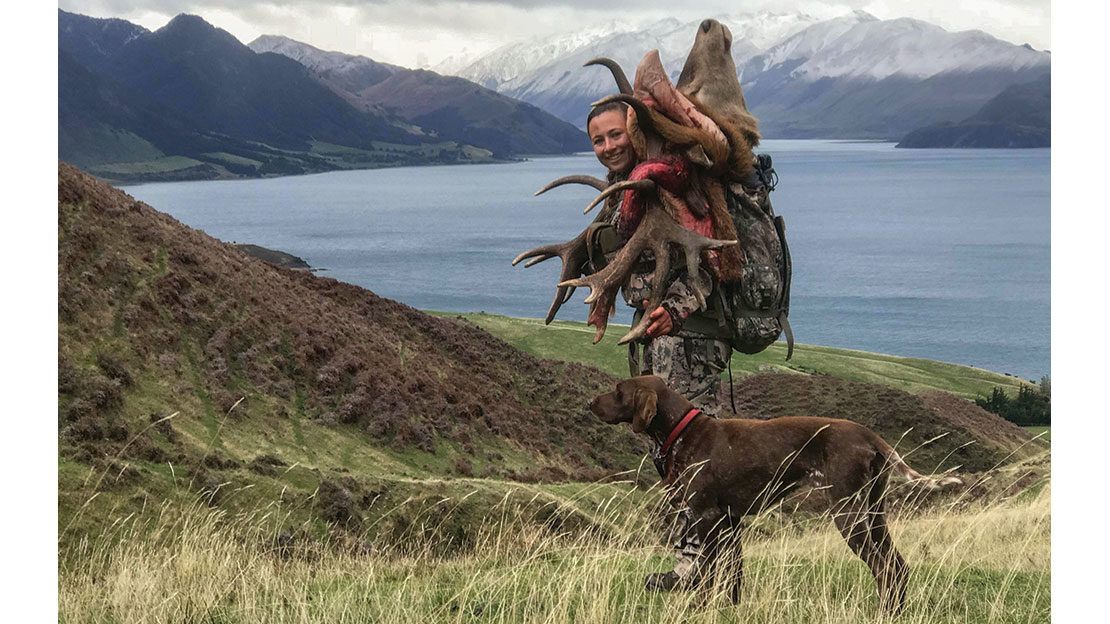
With the lockdown over the 2020 Roar season, this fall has been eagerly awaited. Hopefully, the dedication, hard work, time and effort will come to fruition leading to a successful Roar and maybe even a stag of a lifetime – or at least one worth mounting. For many, the preparations have been towards achieving just that: harvesting a stag worthy of wall space. But what about when this deserving stag is on the ground? The information in this article will prepare you for just that moment!
There are many ways to skin a cat, as the saying goes, and a stag – or other New Zealand game species for that matter – is no different. The order of cuts for shoulder caping can vary, and even techniques differ between species and taxidermists’ preference. The end result, however, should be the same.

Beginning the Caping Procedure
Let’s begin from the top of the animal’s back because it’s likely animals worthy of mounting will also be worthy of a photo or two, and therefore, will already be rested on their stomach.
To ensure the taxidermist has plenty of room to pull the cape over the mount, particularly if the mount will be offset or turned, initiate the incision almost at the hips, allowing the circumferential cuts to pass just above the pizzle. Along with providing the taxidermist more than adequate skin, the excess hide acts as a grip for handling without damaging hair on visible sections of the mount. From this location, follow the backbone up the centre of the animal towards the head until between the ears, granting access to later break the joint between the atlas vertebra and the skull. All caping cuts should be achieved from the inside of the hide out to avoid hair damage which could later make the stitching more noticeable on the mount; for this same reason, most of the cuts follow lines with thicker or longer hair to aid in camouflaging the stitching.
If hunting with another, one person can secure the head and neck in alignment, allowing easier visualisation and maintenance of the ideal knife path. On a solo hunt, straightness is still achieved by making a medial cut up the back and then aligning the neck by manipulating the horns or antlers with one hand while working the knife with the other for the remaining section.
Whether with another’s aid or solo, always employ short, lever-like strokes when approaching the neck to prevent the blade from slipping towards the holding hand. Especially important on the thick necks of old rutting stags, the angle of the knife blade and stroke at the animal’s neck, where more pressure is needed, is changed to a levering action rather than the swift, smooth and level cut employed to ‘unzip’ the animal’s midline along the top of the back. This levering action keeps the knife tip down and the force is directed back into the animal’s neck, instead of forward along the intended path. Along with this levering technique, repositioning to cut down the neck away from the head eliminates any danger of cutting towards oneself or another.
Sometimes an epic photo spot is a steep and difficult location to begin caping and the animal is shifted to a more level workplace. Additionally, in steep terrain, at times it’s necessary to tie the animal to keep it from sliding away while caping. To save time, effort, and potential damage to the cape as a result of shifts, whatever position the animal first presents should be where caping begins. As in almost all aspects of hunting, you need to be flexible and adapt. Just as a shot on the hill won’t be from a bench rest as at the range, caping and quartering on the hill won’t have the aid of a gambrel and hoist like at the killing shed. Keep in mind when moving an animal for a photo or to a safer work area to go with the hair, dragging headfirst because the hair on most animals runs down the body and therefore less damage is done.

Circumferential cut
Once the cut along the backbone is complete, begin the circumferential cuts down each side from the back-most portion of the incision before skinning. The tension from connective tissue holding the skin in place facilitates even and straight cuts.
Employ caution when making these cuts so as not to rupture the gut cavity, because the animal’s posture may create exaggerated pressure behind the short ribs. Bacteria from the digestive track can then contaminate the cape and lead to an increased rate of hair slippage.
Cut ventrally (towards the animal’s underside) as far as the animal’s position and terrain allow before beginning to skin the animal. Leave behind the pizzle and any grossly contaminated skin around it, because once the cape is folded together, this vector can introduce more bacteria.
.

Legs
Stop and consider a few variations to skinning the animal’s front legs before continuing: sleeve the legs or fully open them.
Fully opening the legs is the quickest and easiest method and should be employed anytime safety is in question – such as, if the animal is in an avalanche shoot or precarious country or if limited light left in the sky will lead to a riskier walk back to camp. Additionally, this method is actually preferred by most taxidermists if there’s no immediate access to a freezer and the animal needs to be salted, because it allows for more adequate salting.
For this method, turn the animal on one side and cut from the back of the knee through the thickest portion of hair, where the two angles of hair growth meet, and continue the cut all the way up the back of the leg and just below midway along the animal’s side until it intersects the circumferential cut. Again, this cut is easiest to complete neatly when the skin is still tautly connected to the animal.
Once part of the leg is skinned, the hide can be cut at the knee joint from the inside out. Then skin or punch the cape up from the bottom of the side flap. The way the transverse muscles lay on the side of the animal makes punching or skinning much easier when approached ventrally.

Sleeved legs, however, don’t allow access below this muscle group, so begin skinning both sides from the dorsal cut before rotating. After freeing the skin on the animal’s side, skin down the leg as far as accessible from the body of the animal. Next, return to the outside of the leg and cut from the back of the knee along the thick hairline, as explained in the previous method. Unlike the fully opened method, stop at the animal’s elbow. Skin from the leg back towards the body until the other opening is met. Free the cape at the knee cutting from the inside out once skinned. Then the leg can be bent and pulled through the hole.
Although this sleeving method takes a bit longer, some taxidermists prefer it because it saves some stitching when mounting. Check with your taxidermist before the Roar to discuss their preferred method.
Now the cuts through the skin are complete, and only skinning or punching and removing the head remain to free the cape. Warm fallow bucks and chamois punch easily, and even red stags can be punched; however, tahr generally require skinning.

A Clean Cape
When skinning, it’s important to leave as little meat on the cape as possible, because meat provides energy and an amiable environment for bacterial growth resulting in hair slippage. Capes slip because bacteria decay the skin as they proliferate; this first occurs in the protected, moist, and energy-rich environment of the hair follicles, destroying the structural integrity necessary to hold the hair in place and thereby allowing the hair to fall out or ‘slip’. Salting can prevent bacterial proliferation, not only drying the environment, but also creating salinity too great for most decay-causing bacterial growth. Meat and fat on the cape hinder the salt’s penetration into the skin and provide an energy-rich environment for the bacteria to flourish.
To remove meat when skinning, technique and a sharp blade should be employed. While a sharp boning knife definitely does the job, many hunters find the scalpel-sharp Havalon or Gerber blades better suited. Creating tension through pulling the skin while cutting lightly back into the hide is a tried-and-true technique for a clean cape. Nonetheless, take care when employing this technique not to cut through the skin. The tension enables vision of white connections between the muscle and the hide and only these small connections should be severed, not the meat itself.
While employing tension is vital for this technique, take care to not damage the hair on the cape by pulling. The tail end of the cape (if taken almost from the ribs) won’t be displayed on the mount. A hole can be cut in this portion to facilitate pulling the skin on lighter species or creating the tension needed for skinning on stags or tahr. If areas on other parts of the cape need to be held to provide tension, always hold the inside of the hide, rather than the hair.

Removing the Head
Once the cape is free from the body of the animal, the head can be removed. Before attempting, make sure the skin is free all the way to the top of the cut between the ears and down both sides to the jaw. Then tuck the head forward and tap the knife blade down in between the ears until it falls into the joint. This joint is between the topmost atlas vertebra and the skull. From this hole, sever the connective tissue around each side on the neck and apply forward pressure, opening the joint. The atlas vertebra has wings that extend towards the head from the central hole, so likewise, extending cuts slightly forward will aid in the ease of opening.
From here, the neck can be twisted to completely break the joint if terrain or brush allow. If steepness or growth prevents easily twisting a large-racked head, continue applying the forward pressure and cutting connections inside and around the joint. Learning the anatomy of this joint will help make cuts more direct when severing connective tissue and opening.
After breaking through the joint, the trachea and esophagus can be severed. Save this task for last, always removing the head from the top, to prevent any digestive fluids that may be in the esophagus from tainting the cape. Additionally, pull the cape forward, in front of the head, and move the head away from the neck when the tubes are cut to prevent contamination. Remove the tongue, also, to minimise bacterial spread and resulting slippage around the mouth, but cut with caution to avoid accidental nicks in this delicate and irreparable portion of the cape.

Care of Your Cape
Arguably, the most important step for maintaining the integrity of the cape and avoiding hair slippage is to allow the cape to cool before packing. However, while the cape should be cool to diminish bacterial growth, it shouldn’t get dried out. Dryness does hinder bacterial growth, but water is needed as a solvent to spread the salt through the cape later, curing and drying it for maximum bacteria prevention. Therefore, if it’s a hot and sunny day, the cape should be folded onto itself hair out to decrease water loss when cooling. Like with meat, the cape should be packed in breathable material to further reduce bacterial growth.
Taxidermists are happy to receive a cape at this stage, and generally prefer head skinning themselves to prevent accidental cuts in this fine-haired, hard-to-conceal area paramount for the mount. However, if longer-term storage is needed at home or camp, a few extra precautions should be taken. The following article will address head skinning, turning faces, salting, and skull care for longer-term storage.
Even if your next animal isn’t a monster worthy of a wall mount, consider caping it anyway. Practice makes perfect, and it’s better to discover difficulties and learn techniques on a less special skin.
Adding to the value of practice, if the animal has large pedicles and the skin is in good condition, the cape will be valuable to taxidermists who can sell it as a spare to clients with damaged capes and, for capes in good nick, will likely pay or credit you for a later mount.
Information for this article comes from the author’s experiences guiding hunts and working for taxidermists as she follows the fall ruts between the hemispheres.


SHARE YOUR BEST PICS #NZRODANDRIFLE