Hard Yards Stag

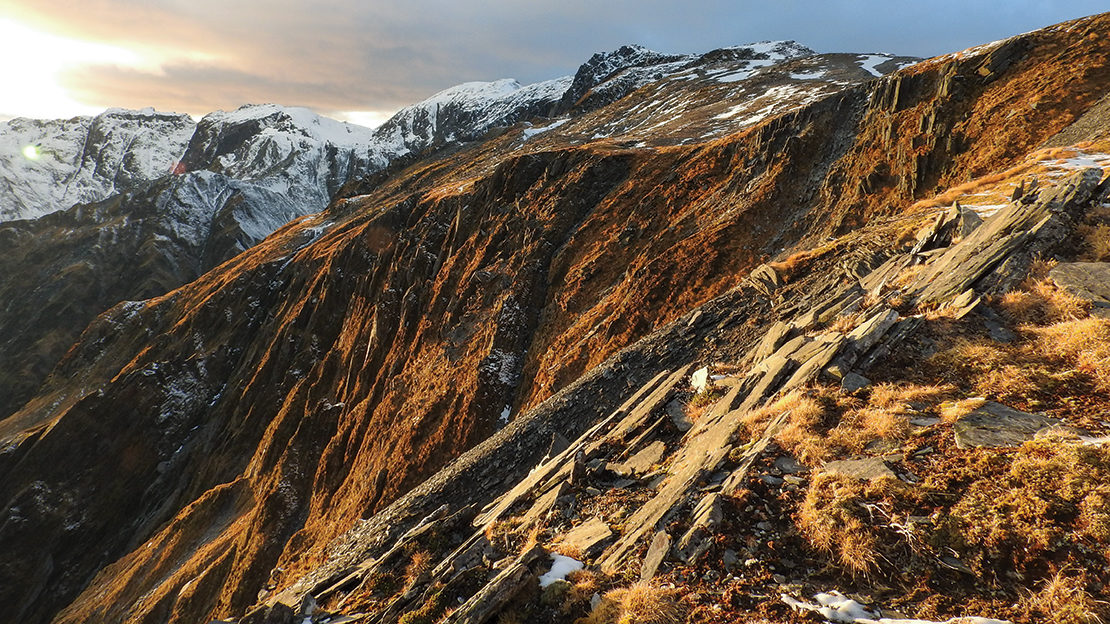
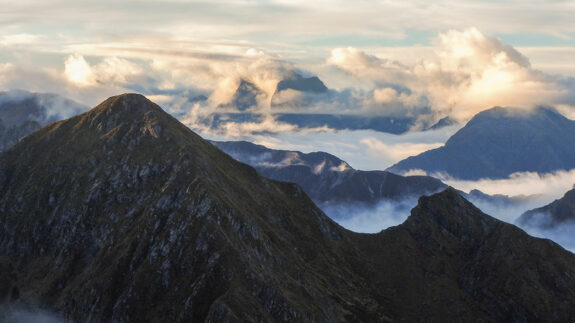
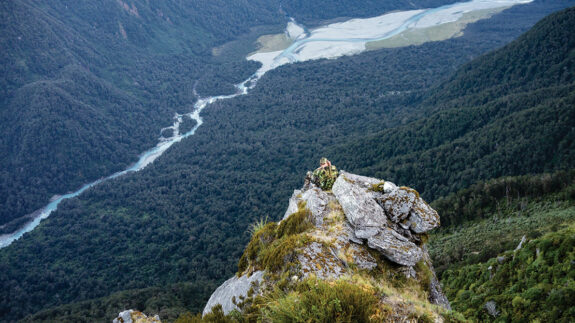
An incredible landscape to be hunting in for a total of 18 days.

May Mission

Having spent every single weekend during Level 3 conducting back-to-back day trips in the Canterbury Region, May brought about Level 2, which allowed for greater exploration opportunities. Knowing there’d be many other trampers and hunters frothing to get out into the hills again, choosing a spot of solitude would require some real hard yards and research.

Without question, the number one thing hunters hate to do is bush-bash through thick West Coast bush for hours on end. Well, that sounded like a good time to me, so a spot was chosen on the Coast that involved some robust bush-bashing. “Get some!” I thought.

Subsequently, I contacted my good mate Kyle, who’s an absolute savage when it comes to modern-day exploration of wilderness areas, to see if he was keen to come have a feed on the Coast. Seeing as Kyle recently cycled the length of Africa, the response was a formality. “Yeah, bro. Keen.” The buffet of hard work and suffering was about to receive some hungry bodies.

The experiences of crossing the first alpine river followed by breathing in that soul-enriching mountain air were heaven-sent for both of us as we ventured upvalley, replacing the urban jungle for mountain sanctuary. Weather for the next three days was forecasted to be bluebird with light winds, so the plan was to beat our way through the thick bush into a hanging valley, climb up onto the tussock tops, then loop back around to the main valley via another bush-bash.

The climb began. Travel was relatively straightforward for the first hour, ascending several hundred vertical metres using a labyrinth of deer trails. Unfortunately, or fortunately (can’t have good times without hard times), the deer trails ended as we entered tiger country – thick, impenetrable West Coast scrub that saps your gas tank, metre by metre.

After six hours of ducking, diving, crawling, wrestling, climbing and descending, we finally made it to the hanging valley. Immediately, we were both fist pumping and stoked to have completed that gruelling stretch while now enjoying easy travel along the rocky creek bed. Camp was made shortly after, just off the creek bed in the low-hanging vegetation, helped via the use a folding pruning saw – a must-have item in any tramper’s or hunter’s kit.

The first evening of glassing revealed three hinds on a lush tussock face, which was then followed by a lone chammy buck up in some Alex Honnold country. Seeing as the days are far shorter in May and we both love our beauty sleep, the sleeping bags were occupied immediately after the sun went down with the classic “Night bro” followed by silence.

Twelve hours later, Day 3 dawned a cold and crisp morning. The same deer were spotted from last night, and with no new animals located, camp was swiftly broken down and travel along an icy creek bed commenced.

Kyle and I have completed stacks of challenging missions together and the one award we’re trying to give each other on missions is the ‘superstar award’. Unbeknown to me, Kyle reluctantly self-awarded himself the superstar award when, while boulder hopping up the creek bed, he slipped on a few ‘banana peels’. Once I found out, the banter began!

Within a couple of hours, after tiptoeing over icy boulders and pushing through thick sub-alpine scrub, we could finally stretch our legs a wee bit on the glorious tussock tops.

Initially, animals were hard to find up there, but several hundred metres north along the range were some quality north-west faces that had full sun for most of the day. “That’s where the deer will be,” I said to myself.

Just before the prime winter deer country was a small section of razorback ridge, so in the interest of safety, I quickly stowed my rifle away to free up both hands, allowing for better balance and security. Although this decision was absolutely the right one, it came back to bite me minutes later.

Having safely navigated the ridgeline, a climb of 150m was required to gain the best vantage point, overlooking the prime deer country. Suddenly, a mature stag was skylining himself at an altitude of 1400m and looking directly at us. It was a wonderful sight, but my predicament soon hit home: the rifle was on my pack, cover was 5m away, Kyle didn’t know what was going on, and the stag was trying to figure out what we were from 200m away. Due to the angle and stowed-away rifle, I chose to slowly move back to cover, hoping the animal would stay interested in our position. Deer detect movement extremely well, so hopes rested on the wind continuing to push into our faces and the stag staying put.

For five minutes, the beast held his ground, and I quickly set my rifle up on the steep terrain for a shot. Unluckily, he decided enough was enough before I was fully set up and nonchalantly exited the area. Knowing how rare and hard finding mature stags on the Coast is, I knew I had to catch up with this animal before the choppers cleaned him up.

Over the next day and half, several deer were spotted on the prime north-west face along with a scattering of chamois throughout the catchment. During the four-hour descent off the tops, I couldn’t help but think about how epic it would be to secure that majestic beast in the grand landscape he calls home … hard times were ahead!

December Mission

Come the Christmas and New Year holiday period, a recce mission was planned with the goal being to relocate that mature stag seen in May. Over 200mm of rain was forecasted for the first two days of the mission; knowing this made me complete all the major river and creek crossings before the high precipitation – in forth, setting up a comfortable, sandfly-filled camp to ride out the storm. Once the storm had lost its wrath and clear skies presented, the arduous 1500m climb was undertaken through the thick West Coast bush for around five hours.

Chamois starting appearing out of nowhere once in the alpine zone, subsequently producing a truly memorable close encounter with two highly curious young bucks. They came from 200m to 15m away, which enabled some magnificent photographs to be taken and lifelong memories to be stored away. Having close encounters with chamois is all about keeping a low profile and not moving an inch, especially once they’re intrigued by your presence. By doing this you can spend upwards of 30 minutes in close proximity to these beautiful alpine animals – as long as the thermals and wind currents stay true.

As I progressed further afield, towards the same north-west face where I’d spotted several deer in May, a lone spiker popped up only 25m away, perplexed at my presence. Shortly after I reached the prime deer country, another spiker was uncovered, followed by a hind and its calf. Lucky enough for me, I was able to sneak in to around 40m and take some priceless photographs.

Mr Stag was still nowhere to be seen, so I travelled westward along the main ridgeline where camp was set up with the thinking it would be a decent location; how wrong that decision was! Night three was character building for sure; the tent was flexing like a sick giraffe and flapping like a fish out of water – fun times were not had!

Following a rather forgettable night on the hill, I checked the weather on the Garmin inReach; to my disgust, the strong south-east winds with rain were to continue. “Time to get out,” I thought to myself.

On the walk out, a promising chamois buck was bumped on the same razorback ridge section as where the stag was first spotted. Knowing most of the deer would be sheltering out of the storm, I completed the seven-hour walk out back to the truck … still wondering, “Where the heck is that stag?”

February Mission

Six weeks later, the mature stags were most likely stripped and stained, so I decided to use some annual leave to allow myself four days to search for my elusive quarry once again. By this stage, I’d completed several energy intensive missions on the east and west coasts, which resulted in my fitness receiving a positive boost. The normal 1500m climb was conducted in a rather quick and easy fashion with me never really breaking stride, making quick time of it. Completing the climb in a personal best time had me up onto the beautiful tussock tops in just under five hours, ready to find that needle in a haystack. Having been to the area twice before, I knew exactly where everything was: campsites, water sources, prime country and best glassing positions.

On Day 2, the old ticker got going when I spotted two stags on the opposite face feeding slowly back into the sub-alpine scrub. Quickly, the Nikon COOLPIX P610 camera was set up and put on full 60x optical zoom in the direction of the two animals. Differences in body size from afar is what got me barred up, as one was significantly smaller in stature and antlers. On close inspection, the smaller one was a well-conditioned spiker, but the second stag had good length and width.

After taking countless photographs of the second animal, I ascertained he was four to five years old, mid to low 30s in length, lacking bulk in the forequarters, his belly hadn’t dropped, no saddle hump present and his head was too erect. To my disappointment, it was clear this wasn’t the same stag I’d seen in May, simply due to his lack of age. My code of ethics with stags is that I won’t shoot anything under the age of six years old, ideally aiming for a seven- to eight-year-old.

“Why?” you may ask. Well, there’s two main reasons for this. The first one being they haven’t reached their full potential as a trophy animal, and secondly, they’re the most cunning, tricky and elusive animals to find. Thus, they present one of the greatest challenges to a hunter, especially when you’re on the Coast, where mature stags are thin on the deck. During the next few days only a couple of hinds were uncovered and dreams of ever finding that stag again slowly dissipated.

April Mission

Days prior to the busy Easter weekend, I was experiencing ‘paralysis by analysis’ from spending hours looking at topographical maps and countless weather websites. As a result, I was constantly second guessing where I was going to go, and with terrible weather forecasted for the Coast, I decided it’d be a better option to avoid the crowds of hunters. “That elusive mature stag is going to get one last mission.”

Generally, I don’t really enjoy hunting the same area over and over again; rather, I prefer to explore new country as you never know what’s around the next corner. Nonetheless, the top two inches were switched to auto-pilot mode as I began the 1500m climb into prime deer country for a fourth time.

Campsite selection was of high importance because of a south-west front due to roll through with a vengeance during the second night. With a stormproof camp set up, I relaxed inside the tent, contemplating whether I’d made the right decision to come hunt this catchment again.

Just as the sun was setting on Day 2, the weather broke and allowed for 30 minutes of glassing to occur. Nothing was seen other than what I thought was a chamois in an adjacent basin.

The next morning, a hind and a yearling were spotted down in the creek bed – the two deer I’d seen in December. Then, out of nowhere, my worst fears were realised: the suspected chamois from last night was another hunter, who was glassing the same head basin. Slightly annoyed about not being able to explore some new country and get a different angle on this area, I decided to go with what I knew.

Instantly, camp was packed up, and within an hour, I was overlooking the place where I’d previously spotted the mature stag. To my delight, the other hunter showed some courtesy by heading in the opposite direction.

Due to the fact I had an intimate knowledge base of how this area looked from different angles, I promptly travelled to the most expansive vantage point.

Within five seconds of glassing from this position, the beast I’d been searching for came into view! It was action stations, and an immediate tricky stalk was necessary. “No time for video,” I said to myself.

Knowing how many nooks and crannies were incorporated into the face, I had to drop down one steep scrub gut to then climb up another steep gut to hopefully achieve an unobstructed view of the stag and his harem of hinds. Every footstep was taken with careful consideration as progress was slowly gained in his direction.

The last 30m of the stalk involved a scrub climb on a 60-degree face; the tension and my heart rate were truly palpable. Inch by inch, I crept up and peered over the ledge.

“Dammit! Nothing! Where is he?” Straight away, I changed position by dropping down a couple of metres, so I was out of sight, to then climb up to the next best shooting position. All sorts of thoughts go through your head when stalking in: “Have they bolted? … Have they gone to the next gut? … Have I completely blown the stalk? … I should have stalked differently.”

Ultimately, you don’t know till you know. In a similar fashion to minutes prior, I crept up ever so slowly to peep over the ledge and … boom! There he was, peacefully feeding away on the lush vegetation.

Within 30 seconds, I’d carefully chambered a 162g ELDX round, placed my sleeping bag on the ground for rear butt support and finally, went through a few breath cycles to reduce my heart rate. Taking the final shot was like a traffic light going through its sequential colour sequence: “Red … yellow … green … you’re cleared … hot,” I said to myself in silence.

To young hunters, never rush your shot – you owe it to the animal whose life you’re about to take to ensure it’s a quick and humane kill. “If in doubt, finger out,” is a saying to remember.

Fortunately, the big moment didn’t get the best of me, and my shot was absolutely perfect, sacking the stag on the spot with a high shoulder impact.

The weight of the moment then overwhelmed me emotionally. Four years of not pulling the trigger on a mature stag, passing up 100s of stags, seeing animals I’d let go be shot too young, maintaining my ethics and putting in countless energy-intensive missions weekend after weekend. From an objective standpoint, this stag was the result of 6000 vertical metres climbed, 28 hours of walking in, 18 days on the hill and 300mm+ of rain.

Butchering the stag on the steep face was a real challenge, as he was constantly wanting to roll down the hill. Upon gathering the meat and antlers, it was a real gut-buster to reach the main ridgeline. From there, it took eight hours to reach the truck – oh, what a feeling that was!

Personally, I’m an extremely intense individual who genuinely wants to get every last drop out of life, which is why I choose the hardest missions possible. Character is built predominantly from constantly venturing beyond your comfort zone and incrementally testing your physical conditioning and mental fortitude. You, as a human being, are capable of a phenomenal life – it simply comes down to how much of your potential you want to unlock before your ticket gets punched. In forth, you’ll exit this life with either contentment or resentment towards the life you’ve lived. Taking maximum accountability combined with a strong work ethic and positive attitude will go a long way to potentiate the gifts you’ve been given. Never play the victim, never make excuses and never take the easy road – if you do, you’re completely undermining the life you could live. Rather, chase those soul-destroying ventures, put in the hard yards and never quit when the going gets tough on a mission. I want everyone to live the best life possible … so please do, team – keep charging!

Appears in:

Read
FOR THE HUNTER WHO HAS EVERYTHING!

The perfect books for the hunter in your life!


Shop now
SIGN UP FOR NEWS AND STAY IN THE KNOW!
Signup

WIN!

Enter our photo competition to be in to win this Buck 285 Bantam BLW Folding Knife?

Learn More
Speech bubble icon

GOT SOMETHING TO share?

We love hearing your stories and adventures

Contribute
Envelope icon

GET IN TOUCH

We’re always keen to get feedback from readers

Contact Us
Book Icon

NEVER MISS AN ISSUE

Subscribe now and save!

Subscribe

SHARE YOUR BEST PICS #NZRODANDRIFLE